
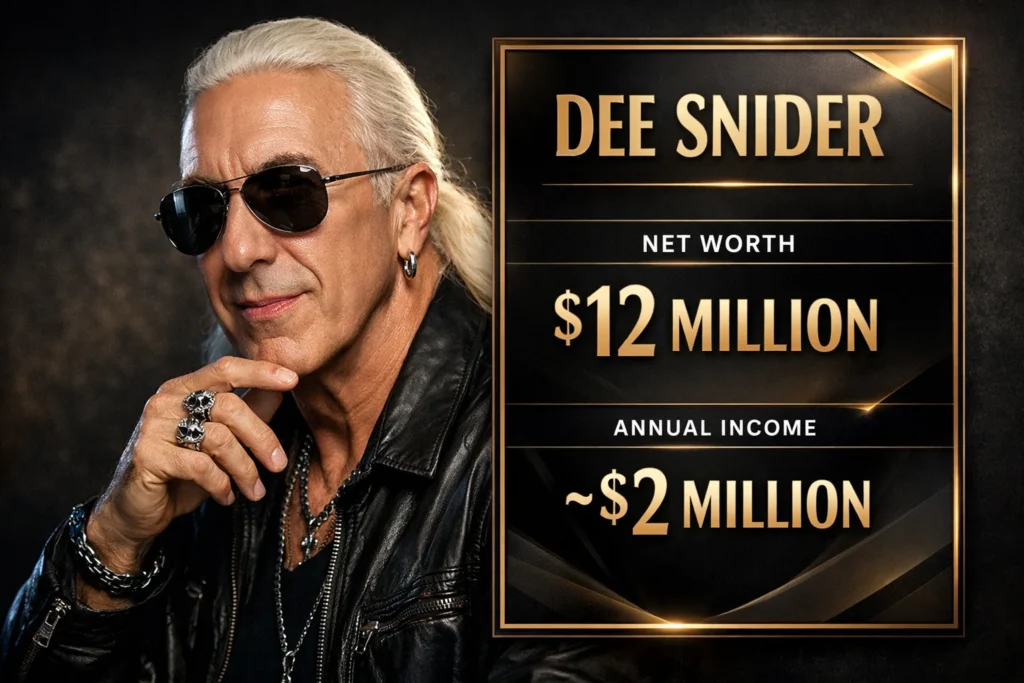
Dee Snider net worth has been a topic of ongoing curiosity among rock music fans, financial researchers, and pop culture enthusiasts alike. As the unmistakable frontman of Twisted Sister, Dee Snider is more than just a heavy metal icon—he is a songwriter, performer, media personality, and outspoken cultural figure whose career spans over four decades.
From chart-topping anthems like “We’re Not Gonna Take It” to Broadway appearances, reality television, radio hosting, and smart licensing deals, Snider has built multiple income streams beyond music alone. This article takes an in-depth look at Dee Snider’s wealth, assets, earnings, and financial journey, offering a realistic and transparent estimate of his net worth in 2026.
Disclaimer: Net worth figures are estimates based on publicly available data, industry benchmarks, and financial analysis. Actual figures may vary.
Bio Data Table
| Attribute | Details |
| Full Name | Daniel Dee Snider |
| Date of Birth | March 15, 1955 |
| Age (2026) | 70 years |
| Birthplace | Massapequa, New York, USA |
| Nationality | American |
| Profession | Singer, Songwriter, Actor, Radio Host |
| Famous For | Frontman of Twisted Sister |
| Genres | Heavy Metal, Hard Rock |
| Years Active | 1976–present |
| Marital Status | Married |
| Children | 4 |
Who Is Dee Snider?
Dee Snider was born Daniel Snider in suburban Long Island, New York. Raised in a middle-class household, he showed an early interest in music, choir singing, and performance. Unlike many rock stars who fell into music by chance, Snider was methodical he studied vocal techniques and stage presence long before fame arrived.
In the mid-1970s, Snider joined a struggling band called Twisted Sister. Over time, he reshaped the group’s image, sound, and identity. Notably, Snider became the band’s primary songwriter, a decision that would later prove financially critical.
His leadership, songwriting ownership, and branding instincts positioned him not just as a performer, but as the business backbone of Twisted Sister.
Net Worth Overview
As of 2026, Dee Snider’s net worth is estimated at $7 million to $10 million.
This estimate reflects:
- Decades of music royalties
- Publishing ownership of major hit songs
- Touring revenue from reunion shows
- Licensing income from commercials, films, and TV
- Media appearances and hosting roles
- Merchandising and brand exploitation
While Snider never reached billionaire status like some global pop icons, his wealth is notable for its longevity and diversification, especially given the volatile nature of the music industry.
Net Worth Growth Timeline
Before Fame
During the late 1970s, Snider earned minimal income from club gigs and local performances. Like many aspiring musicians, he struggled financially while reinvesting earnings into costumes, stage gear, and touring vans.
Breakthrough Phase
Twisted Sister’s breakout came in the early 1980s with albums like:
- You Can’t Stop Rock ’n’ Roll
- Stay Hungry
The latter produced global hits that generated substantial recording royalties, touring income, and publishing revenue. This period marked Snider’s first major wealth accumulation.
Peak / Recent Years
Though mainstream album sales declined after the 1980s, Snider’s net worth stabilized and grew through:
- Legacy touring
- Licensing deals
- Media diversification
- Intellectual property ownership
His financial peak came not from constant chart dominance, but from long-term exploitation of classic material.
Main Sources of Income
Core Profession Income
As a singer and songwriter, Snider’s primary income stems from:
- Songwriting royalties
- Performance royalties
- Album sales (physical and digital)
Owning songwriting credits for Twisted Sister’s biggest hits places Snider in a favorable royalty position compared to many bandmates in the industry.
Tours / Salary / Business Revenue
Twisted Sister reunion tours and festival appearances have generated millions in gross revenue. While touring costs are high, Snider’s share remains significant due to seniority and brand value.
Solo tours, speaking engagements, and conventions also contribute to annual income.
Brand Endorsements & Sponsorships
While not endorsement-heavy, Snider has collaborated with:
- Rock merchandise brands
- Media campaigns
- Music documentaries
These provide supplementary but consistent income.
Merchandise & Licensing
One of Snider’s strongest income streams comes from licensing “We’re Not Gonna Take It” for:
- Commercials
- Films
- Sports events
- Political parody usage
Licensing fees for iconic songs can range from $50,000 to over $300,000 per placement, depending on usage.
Business Strategy Behind the Wealth
Dee Snider’s wealth strategy centers on ownership and control.
Unlike many artists who signed away rights early, Snider:
- Maintained songwriting credits
- Actively managed licensing approvals
- Expanded into media rather than relying solely on music
He diversified early, understanding that heavy metal popularity could fluctuate while intellectual property endures.
Awards & Achievements and Financial Impact
While awards don’t always translate directly into cash, Snider’s accolades enhanced his brand value:
- PMRC Congressional Testimony (1985) – Cultural relevance
- Heavy Metal Hall of Fame recognition
- Legacy media coverage
These moments reinforced his image as both an artist and advocate, indirectly boosting long-term earnings.
Assets & Lifestyle
Real Estate
Snider has owned multiple properties over the years, including suburban homes in New York and later relocations to lower-tax regions. His real estate portfolio is modest but stable.
Cars & Luxury
Unlike flashier rock stars, Snider is not known for extreme luxury spending. His vehicles and lifestyle choices lean practical rather than extravagant.
Fashion / Investments
While famous for outrageous stage outfits, Snider’s personal investments reportedly include:
- Retirement funds
- Media projects
- Personal branding ventures
Net Worth Comparison (Peers / Industry)
| Artist | Estimated Net Worth |
| Dee Snider | $7M–$10M |
| Bret Michaels | ~$20M |
| Sebastian Bach | ~$5M |
| Rob Halford | ~$30M |
| Vince Neil | ~$50M |
Snider ranks solidly among legacy metal frontmen, particularly given his niche genre.
Controversies, Challenges & Financial Risks
Snider has faced:
- Declining album sales post-1980s
- Industry shifts toward streaming
- Legal battles over music usage
However, his outspoken nature and adaptability helped him stay relevant rather than financially sidelined.
Philanthropy & Social Impact
Dee Snider supports:
- Music education initiatives
- Free speech advocacy
- Veterans’ charities
While not widely publicized, his charitable contributions reinforce his positive public image.
How Dee Snider Makes Money Outside Core Profession
Beyond music, Snider earns from:
- Radio hosting
- Television appearances
- Acting roles
- Voice-over work
- Public speaking
These income streams protect his fortune from industry volatility.
Future Net Worth Projection
Looking ahead, Dee Snider’s net worth is expected to remain stable or slightly increase due to:
- Continued licensing demand
- Documentary projects
- Anniversary reissues
- Media commentary roles
Projected net worth (2030): $9M–$12M, assuming no major asset liquidation.
Conclusion
Dee Snider net worth is a testament to longevity, ownership, and strategic diversification rather than short-term fame. While he may not rival the wealth of arena-touring megastars, Snider’s financial stability reflects smart decisions, creative control, and relentless adaptability.
From heavy metal stages to licensing contracts and media platforms, Dee Snider transformed rebellion into a sustainable fortune proving that rock and roll can be both loud and financially sound.
FAQs
What is Dee Snider’s net worth in 2026?
Dee Snider’s net worth is estimated between $7 million and $10 million.
How does Dee Snider make money today?
Primarily through royalties, licensing, touring, radio, and media appearances.
Does Dee Snider own his music?
He owns songwriting rights to major Twisted Sister hits, which generate long-term royalties.
Is Dee Snider still touring?
Yes, occasionally through festivals, solo projects, and special events.
What is Dee Snider’s biggest financial asset?
His songwriting catalog, especially “We’re Not Gonna Take It.”
Did Dee Snider lose money after Twisted Sister?
While album sales declined, diversified income prevented major financial loss.

Emily Carter is a writer at NetWorThro.com covering net worth, salaries and financial growth, delivering easy-to-follow insights into how wealth is built.